
SpeechPathologyMastersPrograms.com is owned by 2U, LLC, parent company of edX. Our goal is to help learners make confident, informed decisions about their education and career. Some programs shown here are offered by universities that partner with 2U, for which 2U provides marketing and operational support and receives compensation. Other programs shown may be paid advertisements from third parties. Both types of programs are identified with the word AD or Advertisement. We aim to keep information current and accurate. Learn more about edX and our partners.
Back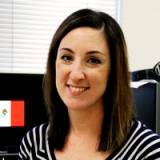
Interview with Dr. Leah Fabiano-Smith of University of Arizona
Read our interview with Dr. Leah Fabiano-Smith, whose research focuses on phonological acquisition and disorders in bilingual Spanish-English speaking children and clinical issues related to culturally and linguistically diverse populations.
Speech Pathology Faculty Interviews
Jun 3, 2018-3 MIN READ
Leah Fabiano-Smith earned her PhD in Communication Sciences from Temple University and completed a postdoctoral fellowship in theoretical phonology at the Center for Research in Language at the University of California San Diego and San Diego State University. Her research focuses on phonological acquisition and disorders in bilingual Spanish-English speaking children and clinical issues related to culturally and linguistically diverse populations. Dr. Fabiano-Smith is the Director of the University of Arizona Bilingual Certificate Program in Speech-Language Pathology and Audiology.
Note: You should consult with your doctor or speech pathologist for recommendations on treatment. The views and opinions expressed in this article are those of Dr. Fabiano-Smith and do not necessarily reflect the official policy or position of SpeechPathologyMastersPrograms.com
How did you become interested in phonological disorders in bilingual children?
I am interested in phonological disorders because they impact communication in a very obvious way. If kids can’t be understood because they mis-learned the grammar of their speech sound system, it has a very real impact on their everyday lives. When I got involved with bilingual children, I extended my interest in phonology to a system that manages two languages.
What are some of the main differences in phonological development of Spanish-English bilingual children?
Overall, phonological acquisition in bilingual children is more similar to, than different from, acquisition in monolinguals. The main difference between kids who speak one language versus two is that bilingual children, especially in the early preschool years, vary quite a bit from one another in how they learn their speech sounds. They experience differing levels of language input in each language and use their two languages in differing amounts. Performance on individual measures of phonological ability can lead speech-language pathologists (SLPs) to think a bilingual child is underachieving or over-achieving as compared to their monolingual peers; However, if you evaluate a variety of measures in those early preschool years, you will see that a bilingual child can be performing at a slower and a faster rate, at the same time, depending on what measure you are looking at. That’s why a comprehensive phonological evaluation, examining a variety of phonological measures at the same time point, is essential to prevention of misdiagnosis.
Are phonological disorders more common amongst bilingual speakers?
No epidemiological studies have been performed examining the rate of phonological disorders in bilingual children, but we have absolutely no scientific reason to believe that bilingual children exhibit phonological disorders more often than monolinguals. Being bilingual does not cause, or worsen, a phonological disorder. We do know, however, that bilingual children are diagnosed with speech and language disorders at a disproportionate rate as compared to their monolingual peers. This is due, however, to biased methods of assessment (e.g., the use of standardized tests) rather than the internal language learning abilities of the bilingual child.
Does diagnosis differ in any way?
When we diagnose a bilingual child with a phonological disorder, we must look across both languages for evidence of impairment. If a bilingual child has typical phonological skills in at least one language, she is not impaired.
In what ways are current assessment and intervention tools doing a disservice to bilingual patients? What needs to change?
Speech-language pathologists are still trained using a monolingual model. Most graduate programs do not offer coursework in bilingual service delivery, and if they do, this training is often elective. SLPs continue to use standardized tests developed for monolinguals to make diagnoses and the standardized tests available in Spanish often misdiagnose children. We have limited resources for assessment and intervention for languages other than Spanish and we have hardly any treatment research on phonological disorders in bilinguals. The use of interpreters is not standard and the Individuals with Disabilities Education Act (IDEA) only demands the use of support personnel for assessment, not intervention. We still have a lot of work to do.
Which of the Bilingual Phonology Lab research are you most proud of?
I see my research program as “social justice through science”. I see the work my lab does as improving the lives of Latino children by placing them on the right educational track. If we can get typical kids in the classroom full time and kids with phonological disorders in the speech room, then we are doing something to increase equity in the educational system.
What should SLP graduate students be doing more of to prepare for their studies and careers
Graduate students are diverse people who will be working with diverse populations. Know who you are, check your biases, be prepared to step outside your comfort zone, don’t be afraid to make mistakes, let yourself connect with families, eat the food that is offered to you (or at least take it to go), and just be yourself – with an open mind and a lot of compassion.
Master of Science in Communication Disorders
Scholarships are available for Emerson College's online MS in speech-language pathology. With no GRE required to apply, you can complete your degree in as few as 20 months and prepare to become an SLP.
- Prepares you to pursue certification as an SLP generalist
- In-person clinical placements at faculty-approved partner sites
- As few as 20 months to complete

Master of Science in Speech-Language Pathology
Pepperdine University’s online Master of Science in Speech-Language Pathology program delivers excellence in its academic and clinical preparation programs, grounded in Christian values. The curriculum is designed to develop skilled, compassionate speech-language pathologists who are not only experts in the field, but are committed to serving and leading in their local communities. Choose between a full-time (five trimesters) or part-time (eight trimesters) program that consists of weekly online learning, three onsite campus experiences, and 400 supervised clinical hours.
- Full-time (five trimesters) or part-time (eight trimesters) options available.
- No GRE scores required.
- 400+ supervised, clinical learning hours are done at schools/clinics local to students
- Three onsite experiences build a sense of camaraderie and community throughout the program

Information last updated: September 2026