SpeechPathologyMastersPrograms.com is owned by 2U, LLC, parent company of edX. Our goal is to help learners make confident, informed decisions about their education and career. Some programs shown here are offered by universities that partner with 2U, for which 2U provides marketing and operational support and receives compensation. Other programs shown may be paid advertisements from third parties. Both types of programs are identified with the word AD or Advertisement. We aim to keep information current and accurate. Learn more about edX and our partners.
Resources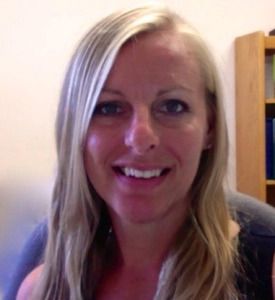
Interview With Dr. Rachel Johnson of Old Dominion University
Dr. Johnson's research investigates influence of structure of practice, feedback, and motivation for learning when healthy and following a brain injury.
Speech Pathology Faculty Interviews
Sep 24, 2019-3 MIN READ
[ { "_key": "ec23c4d5eb51", "_type": "block", "children": [ { "_key": "f431c52c0216", "_type": "span", "marks": [], "text": "Rachel Johnson, Ph.D. CCC-SLP, is an assistant professor of Communication Sciences & Disorders at Old Dominion University. Her areas of interest are in acquired neurogenic communication disorders and augmentative and alternative communication. Her research investigates the influence of the structure of practice, schedule of feedback, and motivation for learning in a healthy system and following a brain injury. Research interests include using neuroimaging technology, like functional near-infrared spectroscopy (fNIRS), coupled with behavior changes to investigate the neural cognitive correlates associated with learning and neural reorganization following a brain injury." } ], "markDefs": [], "style": "normal" } ]
Note: You should consult with your doctor or speech pathologist for recommendations on treatment. The views and opinions expressed in this article are those of Dr. Johnson and do not necessarily reflect the official policy or position of SpeechPathologyMastersPrograms.com
How did you become interested in researching outcomes for brain injury rehab patients?
My interest in brain injury occurred while I was working as a research tech in the speech and audiology department before starting graduate school. I came into the profession with a biology undergraduate degree. I worked for several years as a research technician in a molecular biology lab investigating coagulation factors. I fell in love with research and enjoyed the clinical aspects the most; which is what led me to speech-language pathology. As a research tech in the speech and audiology department, I was exposed to multiple areas of our scope of practice. It was during this time that I saw first-hand the devastation of a brain injury and the impact we can have on the quality of life of brain injury patients. One of the most influential experiences was observing the life-changing impact an augmentative and alternative communication (AAC) device had on the quality of life for a patient with amyotrophic lateral sclerosis (ALS).
How can the use of motivation and feedback influence outcomes for these patients?
Rather than the use of motivation, it is a matter of how can we [clinicians] identify and support an individual’s motivation? As a field, we have only begun to inquire about motivation in this way.
The way clinicians can use feedback to influence patient outcomes depends on the treatment goals and the patient’s needs. Thinking back to my clinical experiences, I recall planning techniques to elicit the desired response and a cursory cue hierarchy; which in most cases served as feedback. I have a greater appreciation of the intricate role our feedback has on learning and how multifaceted it is in regards to timing, content, and modality. For example, most patients with a brain injury have delayed processing; therefore, we need to give them time to process and formulate their responses before providing feedback. In turn, this reinforces confidence and, over time, independence.
Your lab uses different technologies to measure brain activity- how has the availability of these technologies expanded your ability to research brain injury?
Technology is a tool that when coupled with behavior provides additional information that can aid our understanding of underlying processes and individual differences. One of the challenges is differentiating typical from non-typical variances within the underlying neural processes for a specific task. If we can identify individual differences, we may be able to personalize treatment and enhance patient outcomes.
What are some of the barriers to brain injury patients getting the care they need?
Given the complex nature of brain injury, two barriers that seem to be shared across most brain injuries are knowledge and awareness. These barriers seem to touch each aspect from research to service providers to payer source to caregivers to survivors.
How do you select new research to pursue?
Well before graduate school, I started to jot down research ideas in an idea book and is something I continue to do. From time-to-time, I revisit my ideas to see if there are any ideas that are logical next steps in the research plan.
What aspect of your research are you most proud of?
I am most proud of any part of my research that has a positive impact on patient outcomes.
Any advice for students starting a speech pathology master’s program?
My Top Ten
- Don’t fear failure – every mistake is an opportunity to learn something new.
- Don’t take everything too seriously – laugh at yourself and with others.
- Schedule self-care.
- Have a routine but, don’t get stuck in the routine.
- Take risks – introduce yourself to someone/something new, apply for opportunities.
- Be present – much of our learning comes from unstructured learning environments. It may not be acknowledged but, it will be noticed.
- Practice self-reflection and identify how you can do better.
- Seek help when you need it. Knowing when you need it comes from practicing all of the above.
- Be prepared – for the expected and expect the unexpected.
- Have fun!
Master of Science in Communication Disorders
Scholarships are available for Emerson College's online MS in speech-language pathology. With no GRE required to apply, you can complete your degree in as few as 20 months and prepare to become an SLP.
- Aspiring SLP generalists are prepared to pursue ASHA certification.
- Students can earn an Emerson Master of Science in Communication Disorders online in as few as 20 months.
- Online classes are taught by expert Emerson faculty—most of whom are practicing SLPs who view students as colleagues and collaborators.

Master of Science in Speech-Language Pathology
Pepperdine University’s online Master of Science in Speech-Language Pathology program delivers excellence in its academic and clinical preparation programs, grounded in Christian values. The curriculum is designed to develop skilled, compassionate speech-language pathologists who are not only experts in the field, but are committed to serving and leading in their local communities. Choose between a full-time (five trimesters) or part-time (eight trimesters) program that consists of weekly online learning, three onsite campus experiences, and 400 supervised clinical hours.
- Full-time (five trimesters) or part-time (eight trimesters) options available.
- No GRE scores required.
- 400+ supervised, clinical learning hours are done at schools/clinics local to students
- Three onsite experiences build a sense of camaraderie and community throughout the program